Oil prices fall as Russia flags more diesel exports
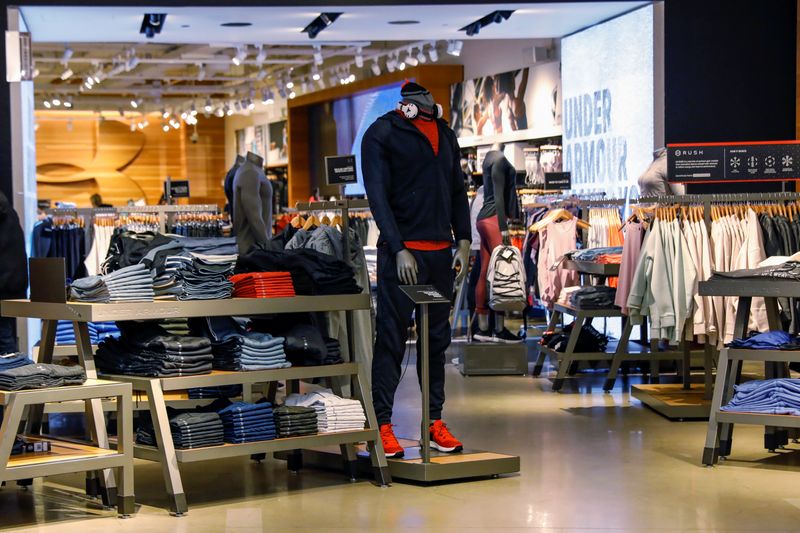
Under Armour, Inc. (NYSE:UAA) finds itself at a crossroads as the athletic apparel company navigates improved financial guidance alongside the impending loss of its marquee athlete partnership with basketball star Stephen Curry. The developments highlight the complex challenges facing the brand as it works to stabilize operations and return to consistent growth in a competitive marketplace.
The Baltimore-based athletic wear manufacturer has demonstrated modest operational improvements while confronting structural headwinds that could shape its trajectory through fiscal year 2027. With a market capitalization of $2.25 billion, Under Armour represents a company in transition, seeking to rebuild its competitive position in the specialty retail, apparel, and footwear industry. According to InvestingPro analysis, the stock appears undervalued at current levels based on Fair Value estimates, potentially offering opportunity for investors willing to navigate the turnaround period.
Recent quarterly performance shows mixed signals
Under Armour’s fiscal second quarter 2026 results, reported in November 2025, revealed a company that narrowly exceeded sales and earnings per share expectations. The performance, though positive on the surface, came with important caveats that temper enthusiasm about the company’s near-term prospects. Revenue declined 3.8% over the last twelve months, though InvestingPro Tips indicate analysts predict the company will be profitable this year, with earnings per share forecast to reach $1.25 in fiscal 2027. The platform offers 13 additional exclusive tips for UAA subscribers.
The quarter benefited from a timing item that provided a temporary boost to sales figures. This accounting benefit, while helpful for the second quarter, creates a corresponding headwind expected to negatively impact fiscal third quarter 2026 results. The dynamic illustrates the challenge investors face in assessing whether Under Armour has achieved genuine operational momentum or simply experienced favorable quarterly comparisons.
Analysts note that achieving a consistent sales turnaround remains challenging for the company. The expectation among market observers centers on stabilization in the North American market occurring sometime during fiscal year 2027, suggesting that meaningful growth remains several quarters away.
Management raises operating income outlook
In a vote of confidence regarding cost management capabilities, Under Armour increased its adjusted operating income guidance for fiscal year 2026. The company now projects adjusted operating income between $95 million and $110 million, representing an upward revision from the previous range of $90 million to $105 million.
The guidance increase signals that management believes it can maintain discipline over expenses and improve operational efficiency even as the company works through sales challenges. The revised outlook suggests progress in right-sizing the business and managing the cost structure more effectively than previously anticipated.
Earnings per share forecasts reflect the company’s modest profitability trajectory, with fiscal year one estimates at $0.05 to $0.07 and fiscal year two projections at $0.21. These figures indicate a company expected to generate positive earnings, though at levels that reflect the ongoing challenges in driving top-line growth.
Stephen Curry partnership reaches conclusion
One of the most significant developments for Under Armour involves the ending of its partnership with NBA star Stephen Curry, scheduled to conclude in calendar year 2026, which corresponds to fiscal year 2027 for the company. The termination of this relationship carries substantial implications for Under Armour’s brand positioning and marketing strategy.
Curry has served as one of Under Armour’s most visible endorsers, with his signature basketball shoe line representing a key product category for the company. The partnership helped Under Armour establish credibility in basketball footwear, a segment dominated by competitors with deeper historical roots in the sport.
The loss of this high-profile athlete endorsement could create challenges in maintaining brand visibility and relevance, particularly among younger consumers and basketball enthusiasts. Marketing effectiveness may diminish without Curry’s star power, potentially affecting sales in basketball-related categories and broader brand perception.
The timing of the partnership conclusion, coming as Under Armour works to stabilize its business, adds complexity to the company’s turnaround efforts. Management will need to develop alternative marketing strategies and potentially secure new athlete partnerships to fill the void left by Curry’s departure.
North American market remains focal point
The North American market represents both the primary challenge and the most significant opportunity for Under Armour’s recovery. Analysts anticipate that stabilization in this crucial geography will not occur until fiscal year 2027, indicating that the company faces an extended period of working through market share and competitive positioning issues. An InvestingPro Tip notes the company operates with a significant debt burden, with a debt-to-equity ratio of 1.37, though its current ratio of 1.62 suggests adequate liquidity to meet short-term obligations. For deeper analysis, investors can access UAA’s comprehensive Pro Research Report, one of 1,400+ available reports transforming complex Wall Street data into actionable intelligence.
The delayed timeline for North American stabilization reflects the intensity of competition in athletic apparel and footwear, where established players and emerging brands vie for consumer attention and wallet share. Under Armour must navigate this landscape while managing brand perception challenges and adapting to evolving consumer preferences.
Macroeconomic factors add another layer of complexity to the company’s outlook. Consumer spending patterns, particularly in discretionary categories like athletic apparel, remain subject to broader economic conditions that could either support or hinder Under Armour’s recovery efforts.
Bear Case
Can Under Armour maintain brand relevance after losing its Stephen Curry partnership?
The conclusion of Under Armour’s partnership with Stephen Curry presents a fundamental challenge to the company’s brand positioning in basketball and athletic wear more broadly. Curry has provided Under Armour with credibility and visibility in a sport where the company has historically struggled to compete against entrenched rivals. His departure removes a key differentiator and marketing asset at a time when the company can least afford to lose ground.
The basketball footwear and apparel market operates heavily on athlete endorsements and cultural cachet. Without Curry, Under Armour faces the prospect of diminished relevance among basketball consumers, potentially leading to market share losses in this category. The company will need to invest significantly in either securing comparable talent or developing alternative marketing approaches, both of which carry execution risk and require financial resources.
Brand perception challenges could extend beyond basketball. Curry’s association with Under Armour contributed to the company’s overall premium positioning and aspirational appeal. His absence may make it more difficult for Under Armour to command pricing power or attract consumers seeking products associated with elite athletic performance.
Will timing headwinds and market challenges prevent sustainable growth?
The timing benefit that boosted fiscal second quarter 2026 results creates a near-term headwind for fiscal third quarter 2026, raising questions about whether Under Armour can demonstrate genuine underlying growth momentum. This dynamic makes it difficult for investors to assess the true health of the business and whether management’s turnaround strategies are gaining traction.
The extended timeline for North American market stabilization, not expected until fiscal year 2027, suggests that Under Armour faces persistent challenges in its most important geography. The company must navigate several more quarters of uncertain sales performance while maintaining operational discipline and investing in brand building. This balancing act becomes more precarious without the marketing power of the Curry partnership.
Macroeconomic uncertainties add to the difficulty of achieving consistent growth. Consumer discretionary spending remains subject to economic cycles, and athletic apparel represents a category where consumers can defer purchases during uncertain times. Under Armour’s ability to drive sales growth may be constrained by factors largely outside management’s control, making the path to sustained improvement uncertain.
Bull Case
Does improved operating income guidance signal a successful operational turnaround?
Under Armour’s decision to raise adjusted operating income guidance demonstrates management’s confidence in the company’s ability to control costs and improve operational efficiency. The upward revision to a range of $95 million to $110 million from $90 million to $105 million suggests that restructuring efforts and expense management initiatives are delivering results ahead of expectations.
This operational progress indicates that management has successfully right-sized the business to match current revenue levels while positioning for future growth. The ability to expand operating income even while working through sales challenges shows that Under Armour has addressed some of the structural inefficiencies that previously weighed on profitability. Improved cost discipline creates a foundation for margin expansion when sales growth eventually materializes.
The earnings per share trajectory, with fiscal year two estimates at $0.21 compared to fiscal year one projections of $0.05 to $0.07, suggests meaningful profit improvement potential. If management can maintain operational discipline while gradually improving sales, the company could deliver earnings growth that exceeds current market expectations, potentially driving stock appreciation.
Could North American market stabilization in fiscal year 2027 catalyze long-term growth?
The anticipated stabilization of Under Armour’s North American business in fiscal year 2027 represents a potential inflection point for the company. Once the company achieves stability in this crucial market, it can shift focus from damage control to growth initiatives, potentially unlocking value that current valuations do not fully reflect.
Stabilization would provide management with greater visibility into business trends and consumer demand, enabling more confident investment in product development, marketing, and distribution. The company could then leverage its operational improvements and cost structure to drive margin expansion as sales growth resumes, creating a powerful combination for earnings growth.
Under Armour retains brand equity and distribution relationships that could support a recovery once market conditions stabilize. The company’s presence in major retail channels and its established position in certain product categories provide a platform for growth if management can execute effectively on product innovation and marketing. The current challenges, while significant, may represent a cyclical low point rather than permanent impairment of the business model.
SWOT Analysis
Strengths
- Improved operational efficiency and cost control capabilities
- Raised operating income guidance demonstrates management execution
- Exceeded fiscal second quarter 2026 sales and earnings expectations
- Established distribution network and retail relationships
- Brand recognition in athletic apparel and footwear categories
Weaknesses
- Timing issues creating quarter-to-quarter volatility in results
- Loss of marquee athlete endorsement with Stephen Curry partnership ending
- Challenges achieving consistent sales growth
- Competitive pressures in core markets
- Limited near-term earnings power with modest profitability levels
Opportunities
- North American market stabilization expected in fiscal year 2027
- Potential for margin expansion as operational improvements continue
- Ability to develop new athlete partnerships or marketing strategies
- Product innovation to drive consumer interest and market share gains
- International market expansion potential
Threats
- Stephen Curry partnership conclusion in calendar year 2026 impacts brand visibility
- Macroeconomic headwinds affecting consumer discretionary spending
- Intense competition from established and emerging athletic brands
- Fiscal third quarter 2026 headwinds from timing reversals
- Extended timeline to achieve sales stabilization creates execution risk
Analyst Targets
Barclays Capital Inc. maintained an "Equal Weight" rating with a price target of $5.00 on November 18th, 2025.
This analysis incorporates information from analyst reports published between November 11th, 2025 and November 18th, 2025.
InvestingPro: Smarter Decisions, Better Returns
Gain an edge in your investment decisions with InvestingPro’s in-depth analysis and exclusive insights on UAA. Our Pro platform offers fair value estimates, performance predictions, and risk assessments, along with additional tips and expert analysis. Explore UAA’s full potential at InvestingPro.
Should you invest in UAA right now? Consider this first:
Investing.com’s ProPicks, an AI-driven service trusted by over 130,000 paying members globally, provides easy-to-follow model portfolios designed for wealth accumulation. Curious if UAA is one of these AI-selected gems? Check out our ProPicks platform to find out and take your investment strategy to the next level.
To evaluate UAA further, use InvestingPro’s Fair Value tool for a comprehensive valuation based on various factors. You can also see if UAA appears on our undervalued or overvalued stock lists.
These tools provide a clearer picture of investment opportunities, enabling more informed decisions about where to allocate your funds.
This article was generated with the support of AI and reviewed by an editor. For more information see our T&C.


