Oil prices sink on report of easing U.S. sanctions; IEA release plans in focus
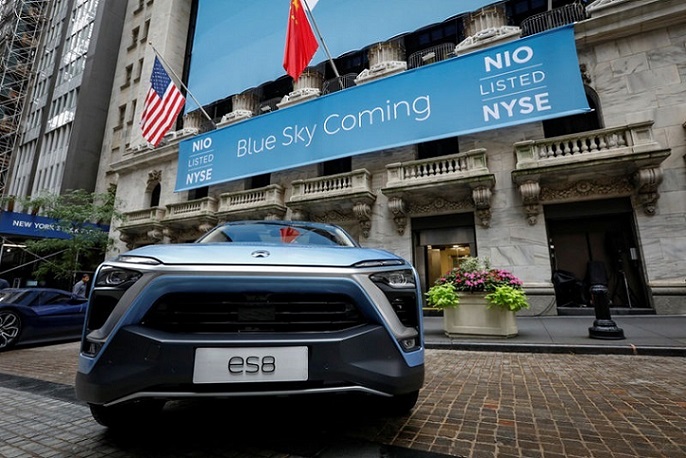
NIO Inc. (NYSE:NIO), the Chinese electric vehicle manufacturer, stands at a pivotal juncture as the company transitions from a growth-focused startup to a business approaching profitability. Recent analyst assessments highlight both the progress the automaker has made in improving its financial metrics and the challenges that remain in a highly competitive market environment.
The company’s performance over recent quarters demonstrates meaningful operational improvements, with analysts noting enhanced margins and stronger delivery numbers. At the same time, NIO continues to invest heavily in new model development and autonomous driving technology while pursuing an ambitious international expansion strategy.
Recent business performance shows meaningful improvement
NIO’s fourth quarter of fiscal year 2025 marked a significant milestone in the company’s financial trajectory. Revenue increased 76 percent year-over-year and 59 percent quarter-over-quarter, representing the strongest growth the company has achieved in recent periods. The vehicle gross profit margin improved by 5.0 percentage points compared to the same period in the previous year and by 3.4 percentage points sequentially.
The fourth quarter results represented the first time NIO achieved positive operating profit margin and net profit, a development that analysts view as evidence of the company entering a healthier business cycle. This financial performance exceeded expectations and provided validation for the company’s strategy of balancing volume growth with margin improvement. For the last twelve months, the company posted revenue of $12.5 billion with 33% year-over-year growth, though it remains unprofitable with earnings per share of -$0.98.
For the first quarter of fiscal year 2026, NIO has set ambitious targets that include nearly doubling shipments year-over-year while maintaining vehicle gross profit margins at levels similar to the fourth quarter of fiscal year 2025. This guidance suggests management confidence in sustaining the operational improvements achieved in recent months.
Product strategy centers on premium and mass-market segments
NIO’s product roadmap includes three new mid-size and large-size sport utility vehicles expected to launch during fiscal year 2026. Two of these models are scheduled for introduction in the second quarter, which analysts identify as potential catalysts for the stock. The ES9 model represents a particularly important addition to the lineup, with an average selling price above 500,000 Chinese yuan positioning it to compete directly with luxury vehicles such as the BMW X5 and Mercedes-Benz GLE.
The high price point of the ES9 is expected to contribute significantly to margin expansion, as premium vehicles typically generate stronger profitability per unit. This model addresses the upper end of the market where NIO has established brand recognition and where competition, while intense, offers better margin potential than mass-market segments.
Beyond the premium segment, NIO is developing its Onvo brand to target the 150,000 to 200,000 yuan price range. The company plans to introduce two to three Onvo models and aims to capture an 8 to 10 percent market share in this category. The Onvo L80 represents an initial entry in this segment, with additional models planned to broaden the brand’s appeal and volume potential.
This dual-brand strategy allows NIO to compete across different price points while maintaining brand differentiation. The premium NIO brand can focus on technology leadership and luxury features, while Onvo addresses the larger mass-market opportunity where volume growth potential is substantial.
Financial outlook projects path to sustained profitability
Analysts project NIO’s revenue will grow from 65.7 billion yuan in fiscal year 2024 to 154.9 billion yuan by fiscal year 2027, representing a compound annual growth rate of approximately 33 percent over this period. For fiscal year 2026, revenue projections stand at 125.9 billion yuan, reflecting expectations for continued strong growth as new models reach the market.
The company’s shipment volume is forecast to grow at a 25 percent compound annual growth rate from fiscal year 2025 through fiscal year 2028. This projection incorporates both the launch of new models and market share gains in existing segments. Analysts note that while these forecasts have been adjusted downward from previous estimates due to challenging market conditions, they still represent substantial growth from current levels.
Margin improvement represents a critical component of NIO’s path to profitability. Analysts have raised gross profit margin and operating profit margin expectations for fiscal year 2026 and fiscal year 2027, reflecting confidence in the company’s ability to achieve operational efficiencies and benefit from economies of scale. The company currently maintains a gross profit margin of ~14%, with InvestingPro analysis indicating the stock is undervalued relative to its Fair Value estimate. The company is expected to reach non-GAAP operating profit breakeven in fiscal year 2026, with normalized net profit turning positive in fiscal year 2027.
EBITDA is projected to reach 1.9 billion yuan by fiscal year 2027, marking the transition from cash consumption to cash generation. Full net profit breakeven is anticipated by fiscal year 2028, at which point NIO would have completed its transition from a loss-making growth company to a profitable automaker.
Autonomous driving technology positions company for future competition
NIO has committed substantial resources to developing proprietary autonomous driving capabilities, viewing this technology as a key differentiator in the Chinese electric vehicle market. The company is developing its own World Model and Shenji chips, which will power its autonomous driving systems. This vertical integration approach gives NIO control over a critical technology stack and potentially provides cost advantages compared to purchasing third-party solutions.
The company’s autonomous driving ambitions extend beyond internal use. NIO is exploring opportunities to sell its autonomous driving chips to external customers, which could create a new revenue stream and help offset the substantial research and development costs associated with developing this technology. Success in this area would transform autonomous driving from purely a cost center to a potential profit contributor.
Leadership in autonomous driving technology could provide competitive advantages in several ways. Advanced driver assistance features have become important purchase considerations for Chinese consumers, particularly in premium segments. Proprietary technology also allows for faster iteration and customization compared to shared platforms, potentially enabling NIO to differentiate its vehicles more effectively.
International expansion targets diversified revenue base
NIO has established a goal of generating 20 percent of sales from overseas markets by 2030. This international expansion strategy aims to reduce dependence on the Chinese domestic market and access growth opportunities in markets where electric vehicle adoption is accelerating. The company has already begun establishing a presence in select European markets, though progress has been measured given the complexity of entering new geographic regions. Despite strong year-to-date returns of nearly 10%, the stock has declined over 10% in the past week, reflecting ongoing market volatility.
International expansion presents both opportunities and challenges. European markets offer premium pricing potential and consumers receptive to electric vehicles, but competition from established luxury brands is intense and regulatory requirements are complex. Success in international markets would validate NIO’s technology and brand positioning while providing geographic diversification that could reduce business risk.
The 20 percent overseas sales target represents a substantial shift in business mix and will require significant investment in distribution networks, service infrastructure, and brand building. The timeline extending to 2030 suggests management recognizes the gradual nature of international expansion and the need to establish operations methodically rather than pursuing rapid geographic expansion.
Bear Case
Can NIO achieve profitability amid intensifying market competition?
The Chinese electric vehicle market has become increasingly competitive, with both established automakers and new entrants vying for market share. Price competition has intensified as manufacturers seek to maintain volume growth, potentially pressuring the margin improvements NIO needs to reach profitability. The company’s reduced shipment forecasts for fiscal year 2026 and fiscal year 2027 reflect these challenging market dynamics and raise questions about whether volume targets can be achieved without sacrificing pricing discipline.
NIO’s path to profitability depends on successfully executing multiple initiatives simultaneously: launching new models, ramping production volumes, improving operational efficiency, and maintaining pricing power. Any shortfall in these areas could delay the timeline to breakeven or require additional capital to fund ongoing losses. The company’s substantial research and development spending on autonomous driving technology and new model development represents a significant fixed cost base that requires strong revenue growth to absorb.
Will operational efficiency improvements materialize as projected?
Analysts have raised margin expectations based on anticipated operational improvements and economies of scale. These projections assume NIO can successfully reduce per-unit costs through higher production volumes, improved manufacturing efficiency, and better supplier terms. If the company encounters production challenges, quality issues, or supply chain disruptions, the expected margin improvements may not materialize as quickly as forecast.
The company’s ability to maintain vehicle gross profit margins while scaling the lower-priced Onvo brand presents execution risk. Mass-market vehicles typically generate lower margins than premium models, and successfully managing a multi-brand strategy requires careful resource allocation and operational discipline. Any difficulties in ramping Onvo production or achieving targeted market share in this segment could impact overall financial performance and delay profitability targets.
Bull Case
How will new model launches accelerate revenue growth?
NIO’s product pipeline includes multiple new models across different price points and vehicle categories, providing numerous catalysts for revenue acceleration. The ES9 launch addresses the premium large SUV segment where the company can command strong pricing and generate attractive margins. Success with this model could significantly boost both revenue and profitability given the high average selling price and favorable margin structure of premium vehicles.
The two new models launching in the second quarter of fiscal year 2026 represent near-term catalysts that could drive stronger-than-expected delivery volumes. If these vehicles resonate with consumers and achieve strong market reception, NIO could exceed current shipment forecasts and accelerate its path to profitability. The company’s established brand recognition in China and expanding charging infrastructure provide advantages in launching new models compared to newer market entrants.
Can margin expansion sustain momentum toward profitability?
NIO’s recent margin improvements demonstrate the company’s ability to enhance profitability while growing volumes. The 5.0 percentage point year-over-year improvement in vehicle gross profit margin in the fourth quarter of fiscal year 2025 exceeded expectations and suggests the company has identified effective levers for cost reduction and pricing optimization. If this margin expansion continues, NIO could reach profitability targets ahead of current forecasts.
Economies of scale should provide natural margin benefits as production volumes increase. Higher volumes allow fixed costs to be spread across more units, reducing per-vehicle costs. The company’s vertical integration in areas like battery technology and autonomous driving chips could provide additional margin advantages compared to competitors relying on third-party suppliers. Effective management of operating expenses while scaling the business could result in operating leverage that accelerates the path to sustained profitability.
SWOT Analysis
Strengths
- Strong recent financial performance with 76 percent year-over-year revenue growth in fourth quarter fiscal year 2025
- Achieved first quarterly operating profit and net profit, demonstrating operational progress
- Diverse product lineup spanning premium and mass-market segments
- Proprietary autonomous driving technology with potential external monetization opportunities
- Established brand recognition in Chinese premium electric vehicle market
- Vertical integration in key technologies including battery systems and autonomous driving chips
Weaknesses
- Current unprofitability with breakeven not expected until fiscal year 2026 to fiscal year 2028
- Reduced shipment forecasts reflecting challenging market conditions
- High research and development spending creating substantial fixed cost base
- Limited international presence with majority of sales concentrated in China
- Execution risk in managing multi-brand strategy across different price points
Opportunities
- New model launches in fiscal year 2026 providing multiple growth catalysts
- International expansion targeting 20 percent overseas sales by 2030
- Autonomous driving chip sales to external customers creating new revenue stream
- Margin expansion from premium ES9 model with average selling price above 500,000 yuan
- Market share gains in mass-market segment through Onvo brand
- Growing electric vehicle adoption in China and globally
Threats
- Intense competition in Chinese electric vehicle market pressuring pricing and margins
- Potential material cost inflation from copper and lithium price increases
- Slowing auto sales growth in China impacting overall industry volumes
- Established luxury automakers introducing competitive electric vehicle offerings
- Regulatory changes affecting electric vehicle subsidies or market access
- Macroeconomic conditions impacting consumer demand for premium vehicles
Analyst Targets
- Nomura - Buy rating, $6.60 price target - March 11th, 2026
- Morgan Stanley Asia Limited - Overweight rating, $7.00 price target - January 27th, 2026
This analysis incorporates information available from January 2026 through March 2026.
InvestingPro: Smarter Decisions, Better Returns
Gain an edge in your investment decisions with InvestingPro’s in-depth analysis and exclusive insights on NIO. Our Pro platform offers fair value estimates, performance predictions, and risk assessments, along with additional tips and expert analysis. Explore NIO’s full potential at InvestingPro.
Should you invest in NIO right now? Consider this first:
Investing.com’s ProPicks, an AI-driven service trusted by over 130,000 paying members globally, provides easy-to-follow model portfolios designed for wealth accumulation. Curious if NIO is one of these AI-selected gems? Check out our ProPicks platform to find out and take your investment strategy to the next level.
To evaluate NIO further, use InvestingPro’s Fair Value tool for a comprehensive valuation based on various factors. You can also see if NIO appears on our undervalued or overvalued stock lists.
These tools provide a clearer picture of investment opportunities, enabling more informed decisions about where to allocate your funds.
This article was generated with the support of AI and reviewed by an editor. For more information see our T&C.


